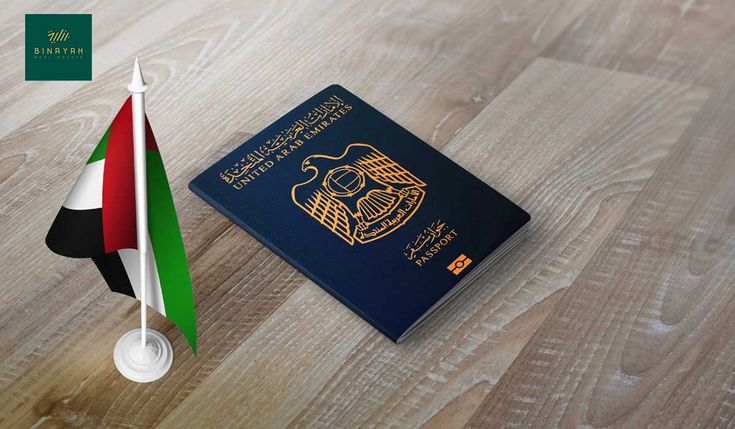
Understanding UAE Residency: The Basics
The UAE is a non-immigration country in the traditional sense, it has no pathway to citizenship for the vast majority of foreign nationals, and residency is fundamentally tied to economic activity: employment, business ownership, investment, or property ownership. This distinguishes it significantly from UK immigration policy, and it's important to understand from the outset.
UAE residency visas are issued through the Federal Authority for Identity and Citizenship (ICA), though in practice, most people interact with the process through their employer's PRO (Public Relations Officer) service, a free zone authority, or a business setup specialist. The General Directorate of Residency and Foreigners Affairs (GDRFA) in Dubai handles day-to-day implementation of residency rules.
When you obtain a UAE residence visa, you also receive an Emirates ID, the national identity card that is required for virtually every official transaction in the UAE, from opening a bank account to registering for utilities. You cannot function effectively in Dubai without your Emirates ID, and obtaining it is one of the first priorities on arrival.
Types of UAE Residence Visa
There are several routes to UAE residency, each with different eligibility criteria, costs, and implications for work rights and family sponsorship.
1. Employment (Work) Visa
The employment visa is the most common route for UK nationals relocating to Dubai. It requires sponsorship from a UAE-registered employer, the employer applies for the visa on your behalf, and your residency is directly tied to your employment. If you leave the job, your visa is typically cancelled within 30 days, triggering a grace period to either secure new employment, change visa status, or leave the country.
Employment visas are issued for 2 years and are renewable. The employer bears most of the administrative burden and cost of the initial visa. Key inclusions typically covered by the employer: visa fees, Emirates ID fees, medical fitness test, and health insurance (a legal requirement in Dubai since 2014). Some employers also cover flights, relocation allowances, and accommodation, these are negotiable and vary significantly by company and sector.
Important for UK residents: UAE labour law has undergone significant reform since 2022. The new Work Permit system introduced four new permit types: Standard work permit, Freelance permit, Part-time permit, and Temporary work permit. This has expanded flexibility for non-traditional employment arrangements.
2. Investor / Partner Visa
If you own a share in a UAE-registered company, you may be eligible for an investor or partner visa rather than an employment visa. This is the standard route for business owners who set up a mainland company or acquire a share in an existing one. The visa is typically issued for 3 years and is renewable, provided the company remains active and meets minimum capital requirements.
For free zone company owners, the free zone authority typically sponsors the investor visa as part of the company formation package. The specific requirements vary by free zone, but most require proof of company ownership, a tenancy agreement for the company office or flexi-desk, and payment of visa-related government fees.
See our Business Setup Guide for a full breakdown of company formation costs and which free zones offer the most cost-effective visa sponsorship for different business types.
3. Freelancer Permit
The UAE freelancer permit (sometimes called a freelance visa or solo entrepreneur visa) is a relatively recent introduction that allows individuals to work independently without needing to establish a full company. Several free zones and the Dubai Creative Clusters Authority (DCCA) offer freelancer permits for specific professional categories, primarily in creative, media, technology, and education fields.
The freelancer permit is a cost-effective option for solo professionals who don't need the full structure of a company. Costs typically range from AED 7,500 to AED 15,000 per year depending on the free zone and activity type. The permit includes residency visa sponsorship and the ability to invoice clients legally in the UAE.
Key limitation: freelancer permits generally restrict you to the activity types listed on the permit. If you intend to operate across multiple business sectors, a company formation may be more appropriate. Read more about this decision in our Free Zone vs Mainland comparison.
4. Property Investor Visa
UK nationals who purchase property in Dubai worth AED 750,000 or more (approximately £160,000 at current exchange rates) may be eligible for a property investor residence visa. Properties must be in approved freehold areas, which include most of the major Dubai residential developments, and the property must be fully paid (no mortgage outstanding) or the paid portion must exceed the minimum threshold.
The property investor visa is typically issued for 2 years and provides full residency rights, including the ability to sponsor dependants. It does not, however, automatically provide the right to work, a separate employment or investor visa would be required for employment purposes.
5. Retirement Visa
The UAE introduced a retirement visa in 2020 for individuals aged 55 or above who meet one of three financial criteria: property investment of AED 2 million or more, savings of AED 1 million or more, or a monthly income of AED 20,000 or more. The retirement visa is issued for 5 years and is renewable. It requires annual health insurance coverage. For UK residents considering retiring to Dubai, this is an increasingly viable option given the absence of UAE income tax on pension income.
The UAE Golden Visa: Full Guide for UK Residents
The Golden Visa is the UAE's flagship long-term residency programme, introduced in 2019 and significantly expanded in 2022. It represents the closest the UAE comes to offering permanent residency, a 5 or 10-year renewable visa that is not tied to an employer and does not require a UAE sponsor.
Who Qualifies for the Golden Visa?
The Golden Visa is available across several categories:
| Category | Eligibility Criteria | Visa Duration |
|---|---|---|
| Real Estate Investor | Property investment of AED 2 million+ | 10 years |
| Entrepreneur | UAE-based business with AED 500,000+ capital, or accreditation from an approved incubator | 5 years |
| Talented Professional | Specialised talent in defined fields (medicine, science, engineering, arts, culture) | 10 years |
| Outstanding Student | GPA 3.75+ at UAE university or equivalent | 5 years |
| Humanitarian Pioneer | Accreditation from relevant UAE authority | 10 years |
| Executive / Employee | Monthly salary of AED 30,000+ in strategic sectors, employer nomination | 10 years |
Golden Visa: Key Advantages for UK Nationals
For UK residents relocating to Dubai, the Golden Visa offers several significant advantages over a standard employment or investor visa. Most importantly, it is not sponsor-dependent, you are not at risk of losing residency if you change jobs or close a company. This also has important implications for UK tax residency planning: the ability to remain in the UAE without needing to maintain a specific job or company structure provides greater flexibility in managing your UK tax position over time.
Additionally, Golden Visa holders can sponsor unlimited family members (including parents), whereas standard visa holders are subject to salary thresholds for family sponsorship. The Golden Visa also allows holders to remain outside the UAE for extended periods without visa cancellation, standard visas are typically cancelled if the holder remains outside the UAE for more than 6 consecutive months.
For UK tax residency purposes, see our Finance & Banking guide for how UAE residency visa type interacts with HMRC's Statutory Residence Test.
Golden Visa Costs
Government fees for the Golden Visa (as of 2025) are approximately:
- Application and processing: AED 2,000–3,000
- Visa stamping: AED 1,000–1,500
- Emirates ID: AED 370
- Medical fitness test: AED 300–600
- Total government fees: approximately AED 3,500–5,500 (approximately £750–£1,200)
Agency fees, if using a business setup service to manage the application, typically add AED 2,000–5,000 to the above costs. For investment-based Golden Visa applications (property or business capital), the investment amount itself is the primary cost consideration.
Family and Dependant Visas
UAE residents can sponsor family members to join them in Dubai. The sponsorship process requires the primary visa holder to meet minimum salary or income thresholds and provide suitable accommodation evidence.
Salary Requirements for Sponsoring Dependants
- Spouse: Minimum monthly salary of AED 4,000 (with employer-provided accommodation) or AED 6,000 (including accommodation allowance)
- Children: Same threshold as spouse; dependent children are sponsored under the parent's visa
- Parents: Minimum monthly salary of AED 20,000 for parent sponsorship; Golden Visa holders are exempt from this threshold
Children can be sponsored as dependants up to age 18 (or 21 for male dependants in full-time education). After this age, they must obtain their own visa, typically an employment or student visa. Unmarried daughters can remain on a parent's dependant visa regardless of age in some circumstances, though this is subject to ongoing review.
Documents Required for Family Visa Applications
Standard documentation requirements for family visa applications include:
- Sponsor's passport copy and Emirates ID
- Sponsor's valid residence visa
- Tenancy contract (Ejari-registered) proving suitable accommodation
- Salary certificate or proof of income
- Marriage certificate (for spouse), must be attested by the UK FCDO and UAE Ministry of Foreign Affairs
- Birth certificates (for children), same attestation requirements as marriage certificate
- Passport-sized photographs to UAE specification
UK-issued documents require attestation before they are accepted by UAE authorities. The attestation process involves notarisation, FCDO authentication, and UAE Embassy legalisation. This typically takes 2–4 weeks and costs £50–£150 per document, depending on the attestation route used.
Processing Timelines and the Entry Process
UAE visa processing is generally efficient by international standards, but timelines vary depending on the visa type and individual circumstances.
For employment visas sponsored by an established UAE employer, the process typically takes 3–5 working days for the initial entry permit, followed by in-country processing of approximately 10–15 working days for the residency visa stamp. The in-country process involves a medical fitness test, Emirates ID biometrics, and background checks.
For business setup visas (investor, freelancer), the timeline is often 2–4 weeks from company establishment to visa issue, depending on the free zone's processing speed. Some free zones, particularly those focused on business attraction, offer expedited processing for an additional fee.
Golden Visa processing typically takes 3–6 weeks from initial application to visa issue, and may be longer for investment-based applications requiring property or business capital verification.
Medical Fitness Test and Emirates ID
All UAE residence visa applicants must pass a medical fitness test, conducted at approved government health centres. The test screens for tuberculosis, HIV, and hepatitis B and C. This is a standard requirement, and a positive result for certain conditions will result in visa refusal and deportation for existing residents, this is a significant difference from UK immigration policy and should be factored into the decision to relocate.
Following the medical clearance, biometric data (fingerprints and photograph) are collected for the Emirates ID. The Emirates ID is typically issued within 5–10 working days of biometric registration.
Visa Costs: Summary Table
| Visa Type | Duration | Approx. Government Fees | Sponsor |
|---|---|---|---|
| Employment Visa | 2 years | AED 3,000–5,000 (often employer-paid) | UAE employer |
| Investor Visa (mainland) | 3 years | AED 4,000–7,000 | UAE company |
| Free Zone Investor Visa | 2–3 years | AED 3,500–6,000 (included in most packages) | Free zone authority |
| Freelancer Permit + Visa | 1–2 years | AED 7,500–15,000 (annual) | Free zone / DCCA |
| Property Investor Visa | 2 years | AED 3,000–5,000 | Self-sponsored |
| Golden Visa (10-year) | 10 years | AED 3,500–5,500 | Self-sponsored |
| Retirement Visa | 5 years | AED 3,500–5,000 | Self-sponsored |
Note: Government fees change periodically. Confirm current rates with the ICA or your business setup provider before applying.
Common Questions from UK Nationals
Can I hold UAE residency and remain a UK citizen?
Yes. UAE residency does not affect UK citizenship. You will remain a British citizen regardless of your UAE residency status. Dubai does not require you to renounce other citizenships or residencies.
Do I need to spend a minimum number of days in the UAE?
Standard UAE residence visas require you to return to the UAE at least once every 6 months to prevent automatic cancellation. The Golden Visa has no such requirement. From a UK tax residency perspective, however, the number of days you spend in the UAE (and the UK) is relevant to HMRC's Statutory Residence Test, see our Finance & Tax guide for detail.
Can my children attend UK-curriculum schools in Dubai?
Yes. Dubai has a large number of British-curriculum schools and is one of the most internationally diverse school markets in the world. School fees vary significantly by school quality and curriculum. Our Cost of Living guide covers schooling costs in detail.
What happens if my employment ends?
If your employment visa is cancelled by your employer, you have a grace period (typically 30 days) to either secure new employment with a new visa sponsor, change to a different visa category, or leave the UAE. Overstaying without a valid visa incurs daily fines and creates complications for future UAE entry.
Need Help With Your UAE Visa Application?
Business setup and visa consultancies manage the full UAE residency process, from company formation and investor visa to Golden Visa applications. Using a specialist reduces processing time and avoids common documentation errors.
Next Steps
Once you've identified your visa pathway, the next step is understanding the broader framework of your relocation:
- If you're establishing a business: read the Business & Work Setup guide for company formation options and costs.
- To understand UK tax implications before you leave: read the Finance, Banking & Tax guide.
- To plan your budget and choose an area: read the Cost of Living guide.
- For the full relocation sequence: return to the Start Here roadmap.